Computer Control of Stand Alone Operation, fully customizable
Available as:
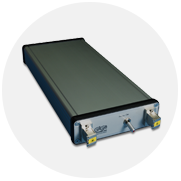
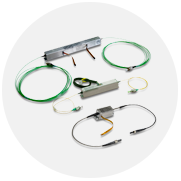
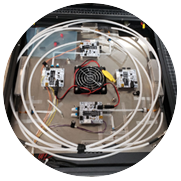
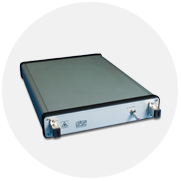
OEM Module with Open Source USB Controller
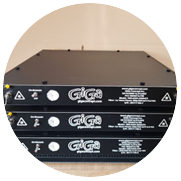
Compact Instrument with USB and remote TTL
Great Flexibility
Scrambling speed from 0 to 166 Hz, or 0 to > 1000 rad/s
Fiber available from stock, SiO2 50 um to 400 um core and beyond, GeO2, Zblan, Chalcogenide, etc. on request
Fiber length: Minimum depending on fiber diameter, no maximum
Fiber protection and armoring choices including plastic bend limiting
Permissible laser power: Same as fiber and connector chosen
Insertion loss: >0.2 dB including typical connector loss
Nom du produit
Nom du produit
Nom du produit
Nom du produit
Nom du produit
Experimental results
AnyWave Fiberbench is best in class for All Fiber Multimode Scrambling Performance using any waveguide
Our clients experiment first hand the efficiency of the high speed all fiber speckle scrambler designed by Giga Concept.
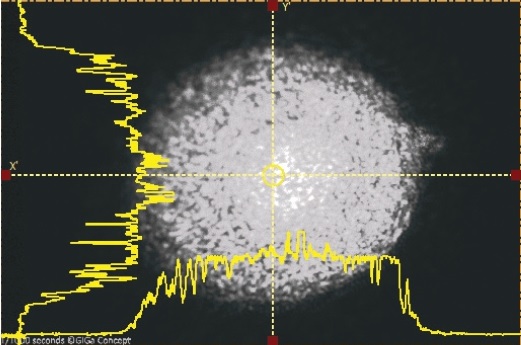
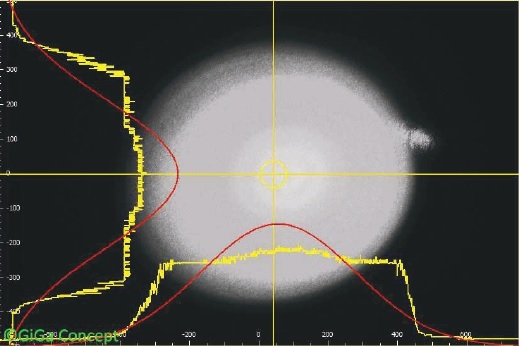
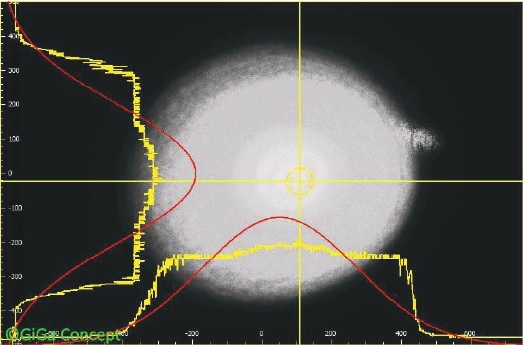
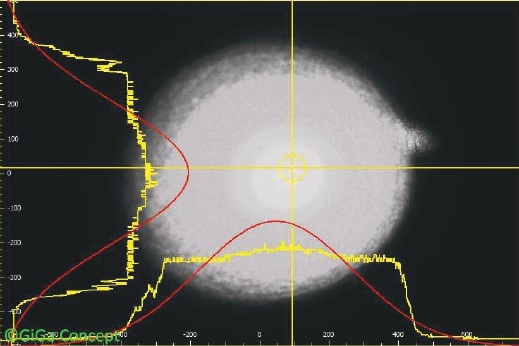
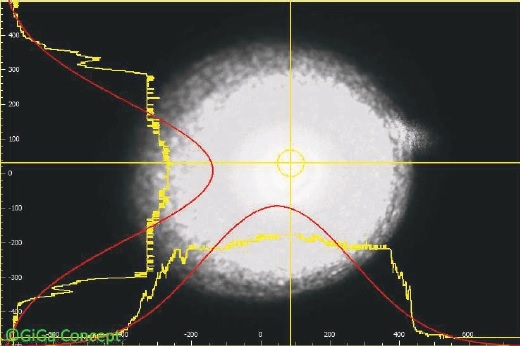
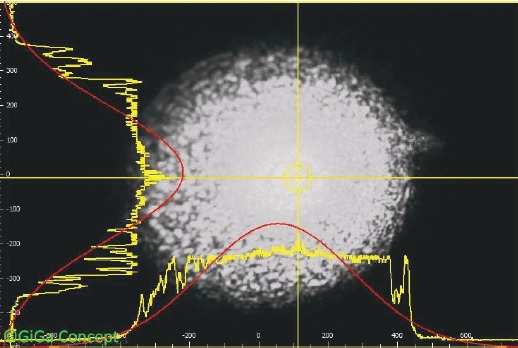
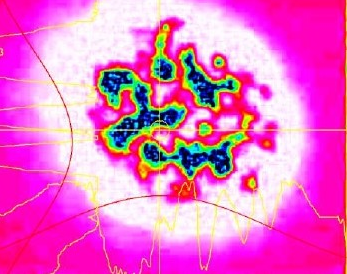
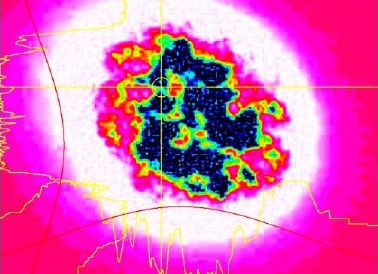
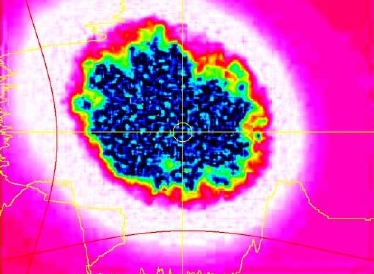
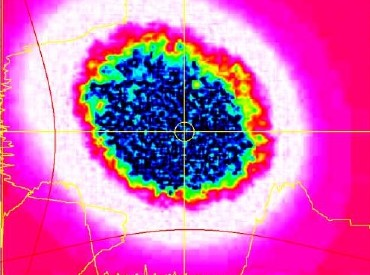
For this particular case study, laser is injected in core and cladding, the resolved structure is from a cheap laser fiber fault finder lens. In typical application with 100% S/N ratio, noise will be < 12% at integration time equal to half scrambling period, 166 Hz period is 6 ms.
650 nm laser 105 um fiber scrambling off
1 s integration scrambling at 166 Hz
0.125 s integration scrambling at 166 Hz
0.033 s integration scrambling at 166 Hz
0.008 s integration scrambling at 166 Hz
1 s integration scrambling at 166 Hz
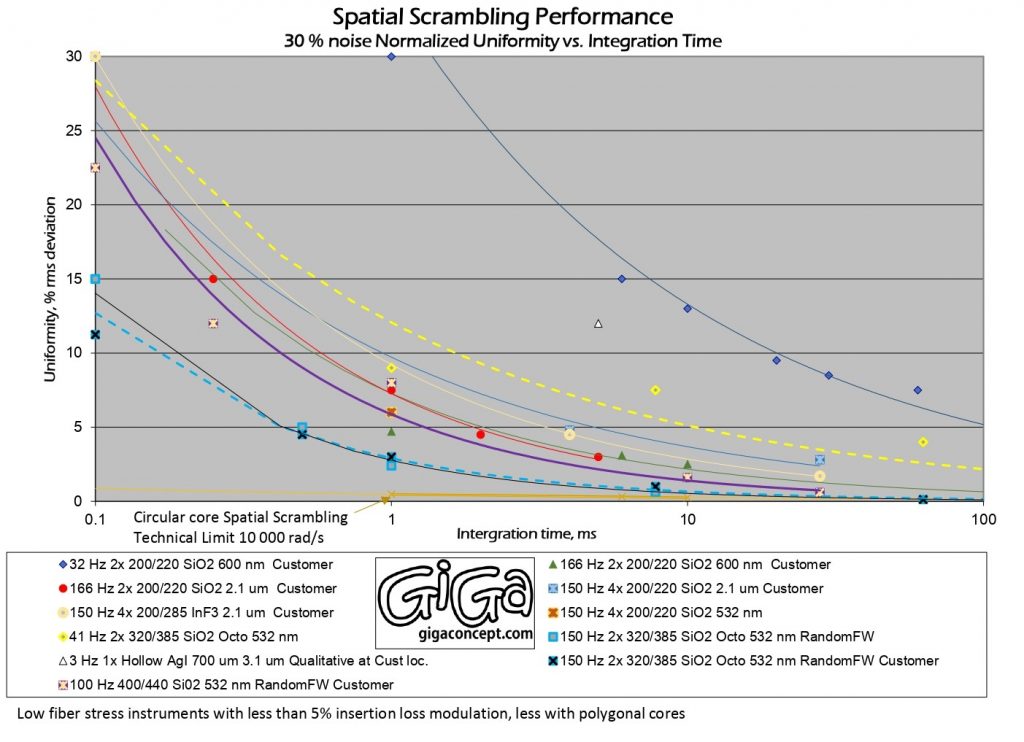
Customer and in-house data using scrambling instruments with 2 rotating elements
Taking into account the laser coherences lengths or the operating wavelengths or fiber core size or materials, performance for a given operating parameter can be linearly extrapolated.
Scrambling randomness does improve short integration time performance, diverse algorithms can be experimented.
Non circular core geometries are being investigated, octagonal core performance is quite promising. Silica and Zblan fibers can be sampled.
Performance Data – NIST
200/220 Silica fiber – 6 ms scrambling period non random 2.1 um wavelength
Median data, integration: 0.1 ms Relative Spatial Noise factor: 1
Median data, integration: 0.25 ms Relative Spatial Noise factor: 1/2
Median data, integration: 2 ms Relative Spatial Noise factor: 1/6
Median data, integration: 5 ms Relative Spatial Noise factor: 1/10
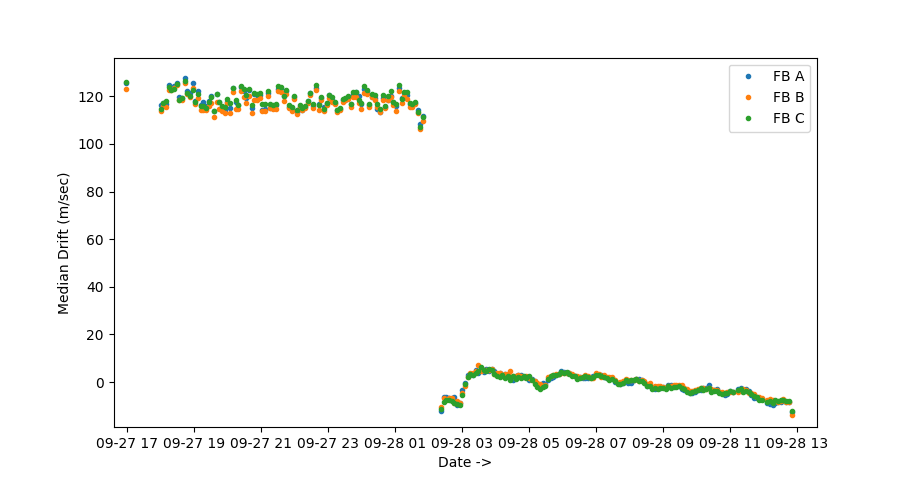
Penn State 800-1300nm birefringent fiber etalon input scrambling results
“By the way, polarisation scrambler seems to be working really well for us.We are using it to stabilise the spectrum of a laser driven Fiber Fabry-Perot in a spectrograph”
Plot shows the scatter in the Doppler velocity shift detected in the spectrograph before and after connecting the Polarisation scrambler. You can see the noise scatter level to be significantly less after connecting the GigaPC.(Ignore the median drift offset in the plot before and after)
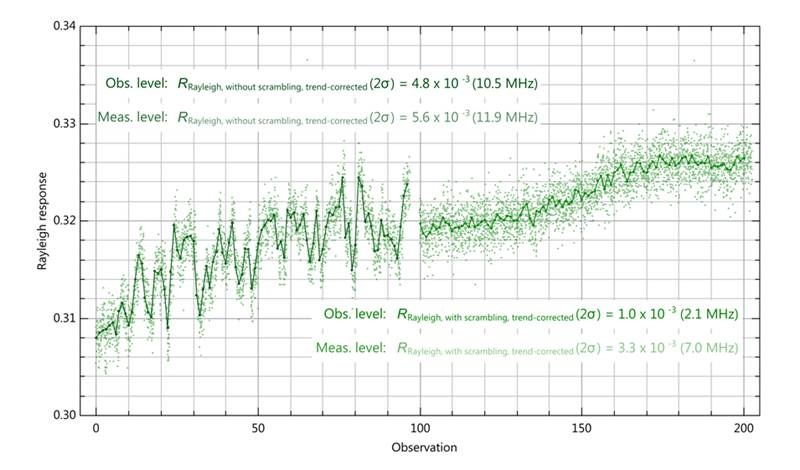
DLR LIDAR ns laser pulse aggregation demo unit results
“We have our first results. We use 355 n, 20 ns @ 50 Hz laser input guided with 100 µm NA 0.22. we are integrating 20 pulses minimum within the 400 ms on the camera behind the spectrometer. The performance looks very promising as we could demonstrate a significantly reduced impact of the speckle on our spectrometer measurements. On 14s averages (700 pulses at 50Hz; Obs. Level) we measured a 4 times better precision.”
Plot shows the scatter in the Doppler velocity shift detected in the spectrograph before and after connecting the Polarisation scrambler. You can see the noise scatter level to be significantly less after connecting the GigaPC.(Ignore the median drift offset in the plot before and after)
How Can we Help You?
We are continuously
developing our technologies
to meet new customer
applications requirements.
Let us know what you need.